Who Made the List? The Hidden Social Costs of Living in an Experience Economy

Photo: Macacaosapao, CC0, via Wikimedia Commons
There's a specific kind of sting that comes from seeing your friend group at a concert you didn't know was happening. Not a massive arena show — something smaller, more intimate. A rooftop set, a dinner series, a weekend festival you could've sworn you'd be invited to. You find out through Instagram, obviously. Someone's story. Golden hour lighting. Everyone laughing.
You weren't there. And now you're doing math in your head.
This is the friendship tax. It's the invisible toll that the modern event landscape is quietly charging all of us — not in dollars, but in social standing, emotional energy, and the slow recalibration of who we actually consider close.
The Guest List as Social Mirror
For most of human history, gathering was logistically simple: you invited the people nearby, the people you saw regularly, the people who showed up without being asked. Geography and habit did most of the work.
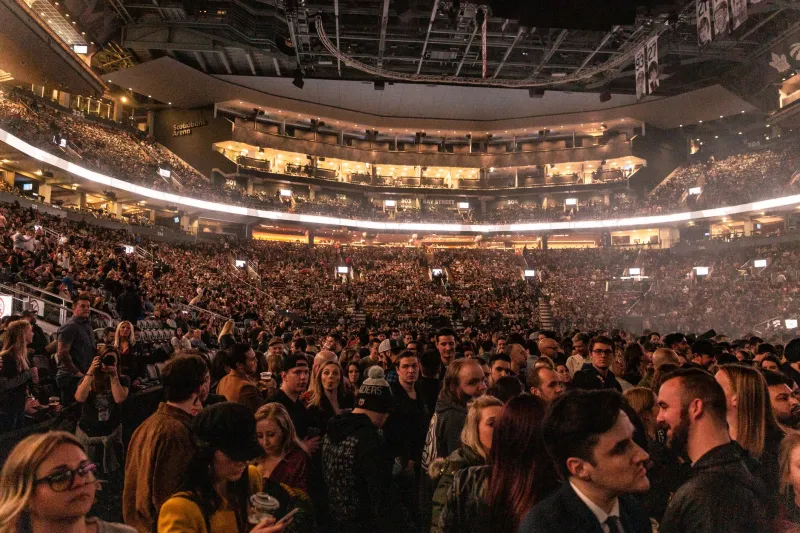
That's not how it works anymore. Events — from sold-out stadium tours to intimate supper clubs with twelve seats — are now planned, ticketed, and documented in ways that make inclusion and exclusion impossible to miss. Organizers build invite lists. Attendees screenshot their confirmations. And somewhere in the middle, friendships are being quietly sorted.
Platforms that make it easy to organize and sell tickets to experiences have genuinely transformed how people gather. That's a good thing in a lot of ways — more events, more access, more moments worth showing up for. But the flip side is that every gathering now carries metadata. Who came. Who didn't. Who was even asked.
When a birthday party becomes a ticketed experience, or a friend group's annual trip gets formalized into an event with a sign-up link, something shifts. The casual, unspoken nature of friendship gets replaced by something that looks a lot more like a hierarchy.
FOMO Has Evolved — And It's More Personal Now
Fear of missing out isn't new. But the version we're living with now is sharper and more targeted than the general cultural anxiety of a decade ago. We're not just afraid of missing something — we're afraid of being left out by specific people, at specific moments, that are now preserved in high-resolution and permanently searchable.
The event economy accelerates this. When experiences are the primary way people bond, signal their identity, and build shared history, not being included in those experiences isn't just a bummer — it's a data point. It tells you something. Or at least, it feels like it does.
Psychologists who study social belonging have noted that exclusion activates the same neural pathways as physical pain. That's not metaphor — your brain genuinely processes being left off a guest list similarly to how it processes a stubbed toe. Now layer on the fact that you can watch the event you weren't invited to unfold in real time on your phone, and you've got a situation that's genuinely hard on people.
Organizers often don't think about this. They're focused on the experience they're building for the people in the room. But every event creates two audiences: the one inside, and the one watching from outside.
The Tiering of Friendships
Here's where it gets complicated. People have always had inner circles. Not everyone gets invited to everything — that's just reality. But the event economy has made these tiers visible and documented in ways they never used to be.
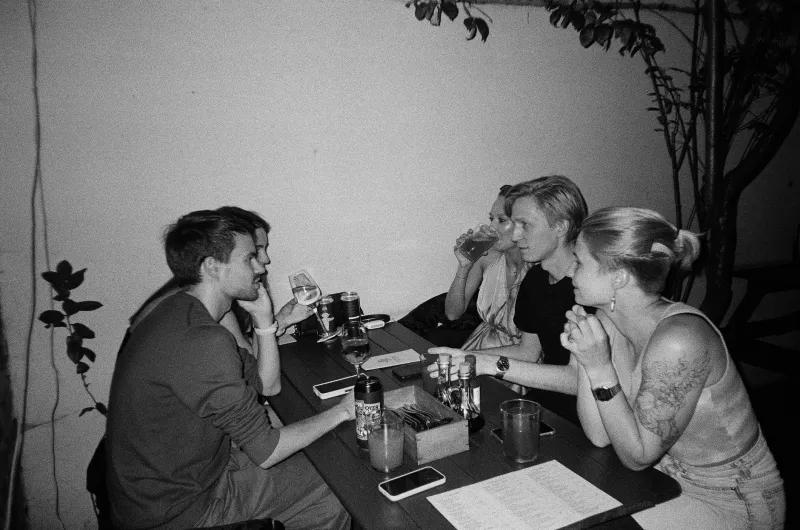
Think about how this plays out practically. A group of eight friends exists. Four of them go to a music festival together. They post about it. The other four see it. Nobody did anything wrong, necessarily. Schedules conflict. Budgets vary. Sometimes an event just isn't your thing. But the photos exist now. The tag exists. The shared memory is out there, and it belongs to half the group.
Over time, patterns emerge. You notice who plans things with whom. Whose name shows up in which event recaps. Who shares tickets with who when a show sells out. These aren't small observations — they're friendship diagnostics, and people are running them constantly, usually without realizing it.
For younger adults especially — the demographic that came of age in the social media era — experiences are deeply tied to identity and belonging. Research consistently shows that Gen Z and younger Millennials place enormous value on shared experiences as a form of relational investment. Which means that when those experiences get distributed unevenly across a friend group, it registers as more than a scheduling conflict. It registers as a statement.
What Organizers Are (and Aren't) Thinking About
If you run events — whether you're a professional organizer or just the person in your friend group who always ends up booking the Airbnb — you're making decisions that have social consequences that ripple well beyond your event page.
Some organizers are thinking about this more intentionally. Smaller, curated experience creators are increasingly thoughtful about how they communicate exclusivity without making it feel exclusionary. There's a difference between building a tight, intentional community around your events and just quietly leaving people out. The best organizers know that.
Ticketing platforms have also started building tools that make it easier to manage invite-only or private events — giving organizers the ability to create a sense of intimacy without broadcasting exclusion to everyone who didn't get the link. That's a meaningful design decision, even if it doesn't solve the underlying social dynamics.
But a lot of the friction isn't about platforms or tools. It's about the fact that events have become one of the primary ways Americans perform and maintain relationships, and we haven't really developed the social norms to handle that gracefully yet.
Learning to Read the Room (You Weren't In)
There's no clean resolution here. The experience economy isn't going anywhere, and neither is the social sorting that comes with it. But there are a few things worth sitting with.
First: not every omission is a message. Budgets, logistics, venue capacity, and plain old oversight are responsible for a lot of situations that feel personal but aren't. The instinct to read meaning into every guest list is understandable, but it's not always accurate.
Second: if you're an organizer of any kind — professional or otherwise — it's worth thinking about the second audience. The people who will see your event documented on social media and feel something about not being there. That doesn't mean you owe anyone an invitation. It means being thoughtful about how you share, and whether you're building something that feels inclusive even when it's necessarily limited.
And third: the friendships that hold up over time tend to be the ones built on more than shared event history. Experiences are great bonding material, but they're not the whole story. The group chat that celebrates when you land a new job, the friend who shows up when things fall apart — that's the stuff that doesn't require a ticket.
The list matters. But so does everything that happens off it.