The Last Train Leaves at 11:04: How the Ride Home Decides Who Shows Up
Photo: Sgt. Christopher Tobey, Public domain, via Wikimedia Commons
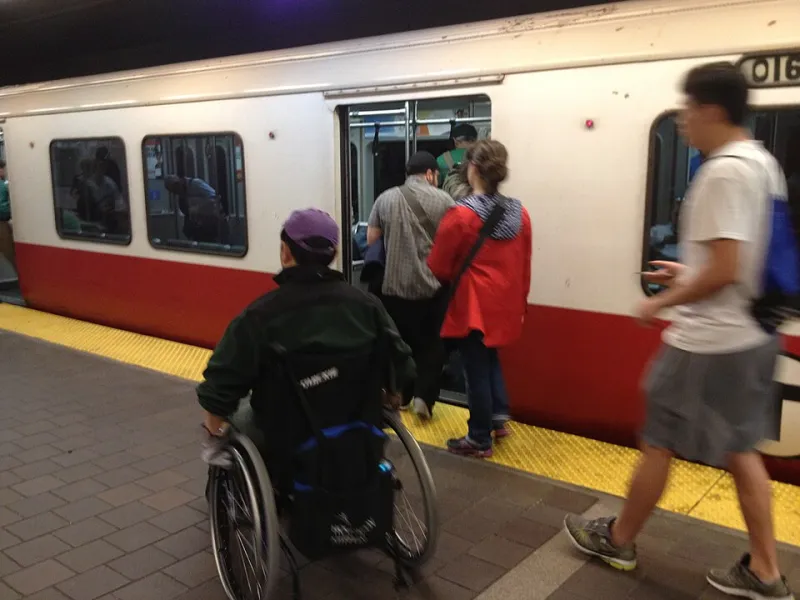
There is a version of a great night out that ends at 10:40, on the sidewalk, with three people splitting a ride that costs more than the ticket. It is not a bad crowd. It is a crowd doing arithmetic in real time — headliner starts at 9:15, last express train leaves at 11:04, surge hits its floor value somewhere around the encore.
Organizers call this a fan problem. It is a programming problem, and it is increasingly a venue selection problem.
The Ten-Minute Rule
Ask people who plan events for a living and a rough heuristic shows up again and again: a venue that is more than a ten-minute walk from a functioning late-night transit option is a different venue than one inside that radius, regardless of what the room looks like.
Inside the radius, attendance is elastic and after-parties work. Outside it, everything hollows out. Headliners start earlier. Merch sells faster at doors because people are worried about the trip. Single-ticket buyers drop off, which is a quiet killer, because singles are the cheapest ticket in the building and the hardest to replace.
The ten minutes is not magic — it is a proxy for a walk people will actually make at 11 p.m. in the dark, in a city they may not live in.
A Curfew Is Not a Ride Home
The distinction trips up a lot of good people. A venue can be entirely compliant with local sound laws and still be hostile to anyone who does not drive. When a county curfew pushes last song to 11:00 and the nearest rail platform stops service at 10:50, those two facts are not in conflict — they simply add up to a sold-out room with a parking lot in it.
You see this in the classic amphitheater belt around major metro areas: gorgeous sheds, 18,000 seats, one access road, and a transit agency that treats the venue as a Sunday-only stop. It is also visible downtown, where a venue can be three blocks from a station and still feel remote because nobody wants to walk that stretch after the show.
Surge as a Hidden Ticket Fee
For a lot of fans under 35, the rideshare is the second ticket. On a high-demand night, a ten-mile trip from a downtown venue can run 2.5 to 4 times its normal price in the twenty minutes after the headliner. For a group of four, that is manageable. For a solo attendee, it can more than double the real cost of showing up.
That math does not show up in your sales data. It shows up as no-shows among single-ticket buyers, as the friend who bails at 10:15, and as the review that says great show but we left early.
Where Venues Are Winning
Some places have quietly solved this, and their playbooks are repeatable.
- Contracted transit. Arrangements with a local agency for extended service on show nights — even one extra train — routinely pay for themselves in concession and merch spend.
- Designated rideshare zones. A well-signed pick-up lot a five-minute walk from the exit, with lighting and staff, cuts the average wait and the surge window at the same time.
- Shuttles to a transit hub. Not to a far-flung parking lot. To a station where three lines converge.
- Bike valet. Cheap, fast, and it converts a walkable district into a walkable venue.
- A real published walk map. Fans will walk farther than you think if the signage and lighting suggest a plan.
Programming Around the Ride Home
Start times are the blunt instrument and they work. Moving doors earlier and locking a hard, communicated end time lets fans build a plan, and in practice it captures more of the audience than it loses. It also spreads arrivals, which reduces the security crush at 8:55.
Beyond that: publish the last transit option on the show page, not just the venue address. Put the transit info in the confirmation email, where people actually read it. Announce last call for merch alongside last call for the trains. Bundle a ride-share credit into higher tiers and watch how many of those buyers arrive alone — that is your answer about who the surge was pricing out.
A Short Checklist for Planners
- Map every venue in your rotation by walking distance to a late-night transit option, not by zip code.
- Estimate the real rideshare cost after the encore, not the average annual price.
- Check whether the local agency has a special-event desk. Most do, and fewer organizers call it than should.
- For outdoor sites, run the exit plan in a spreadsheet before you run it in real life: how many cars, how many lanes, how many minutes.
The Part That Is Easy to Forget
The show is not over when the encore ends. It is over when everyone is standing somewhere that is not your parking lot, wondering how much tonight is going to cost them.
That final ten minutes is part of the product. Program it like one, and the room gets warmer without a single change to the lineup.