Strollers at the Stage Door: The Age Policy Fight Reshaping American Events
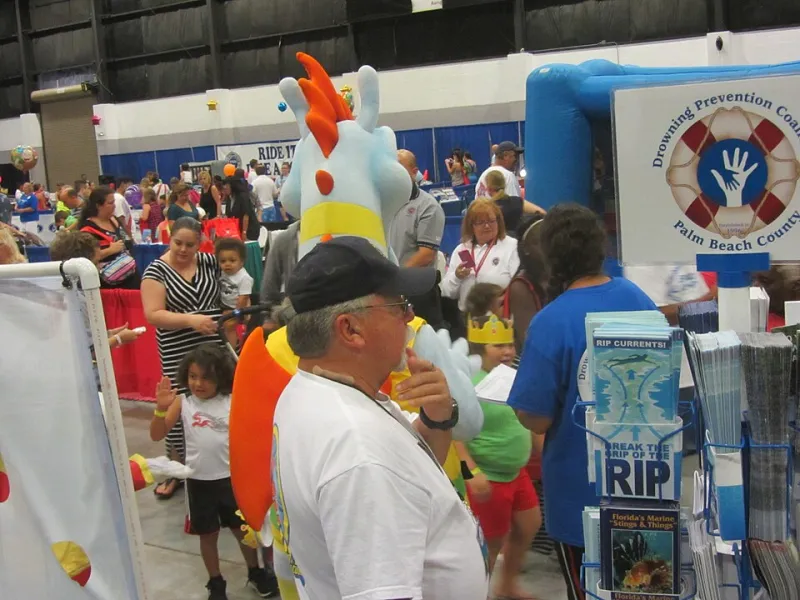
Photo: PoolSafely, CC BY 2.0, via Wikimedia Commons
There's a particular kind of comment section war that breaks out every summer in America. It starts with a festival announcement, a viral photo of a toddler in noise-canceling headphones, or a venue's new 21-plus policy — and within hours, two camps are fully entrenched.
One side believes events are sacred adult space. The other believes excluding families is exclusion, full stop. And honestly? Both are right. Which is exactly why this decision deserves more thought than it usually gets.
Why Adults-Only Exists for a Reason
Let's be fair to the 21-plus crowd, because their argument isn't just about avoiding strollers in a mosh pit.
Adults-only events serve a genuine social function. There's a version of honesty and looseness that only shows up when nobody's parenting. Comedy shows learned this decades ago. So did the growing wave of sober-curious dance parties — many of which, ironically, are adults-only precisely because they're recreating nightclub freedom without alcohol, and parents at a sober rave can dilute the vibe as effectively as a drunk 22-year-old at a family festival.
There's also a self-selection benefit. Adults-only policies filter for a specific kind of attendee — people optimizing for an uninterrupted, immersive experience. That's a legitimate product choice, not a moral failing.
The Case for Bringing the Kids
But here's what the family-first camp understands: the experience economy has a demographic cliff coming.
Millennials and Gen Z — the core ticket-buying demographic for most US events — are now deep into their parenting years. If your venue or festival has no place for their kids between ages 0 and 12, you're not just losing one ticket sale. You're losing a household's entire spending for a decade, plus the habit formation of the next generation of attendees.
The organizers getting this right aren't just "allowing" children — they're designing for them. Think of the festivals that added dedicated family zones with lower decibel limits and earlier programming. The drive-in theaters that revived themselves partly by being one of the only date-night-meets-family-night formats left. The museums and music venues running daytime all-ages programming that converts into lifelong ticket buyers.
A kid who has a great time at your event becomes an adult who buys your tickets. That's not sentimentality. That's a customer acquisition strategy.
The Revenue Math Nobody Runs
Here's the part of the debate that rarely gets numbers attached: age policies are pricing decisions in disguise.
Adults-only events can charge more per head. The audience has more disposable income, drinks flow freely, and the experience commands a premium. Family-friendly events trade per-capita spend for volume — kids' tickets, family bundles, lower-margin food, earlier (and shorter) operating windows.
Neither model is inherently more profitable. But mixing them halfway is where organizers get hurt. A family policy bolted onto an adults-oriented event makes both audiences miserable: parents feel judged, child-free attendees feel ambushed, and nobody buys a second ticket.
The failure mode isn't choosing a side. It's refusing to choose.
How to Decide Without Alienating Anyone
If you're an organizer staring at this fork in the road, a few honest questions cut through the noise:
- What does your event actually feel like at hour three? If the honest answer involves profanity, haze machines, or existential comedy, market it that way and gate it accordingly.
- Can you build a genuinely good family experience, or just a tolerated one? A half-hearted kids' corner is worse than a clear adults-only policy.
- Is there a time-split play? All-ages afternoon, 18-plus evening. Same venue, same production, two clean products.
- What does your community lack? In cities drowning in adults-only nightlife, family programming is white space. In towns where every event is a family event, adults-only is the differentiator.
The events splitting this debate down the middle are the ones trying to be everything at once. The ones winning have picked a lane, communicated it clearly, and built the experience their audience actually came for.
Families or no families isn't a moral question. It's a product question. Answer it like one.