Sold Out Doesn't Mean What You Think It Means
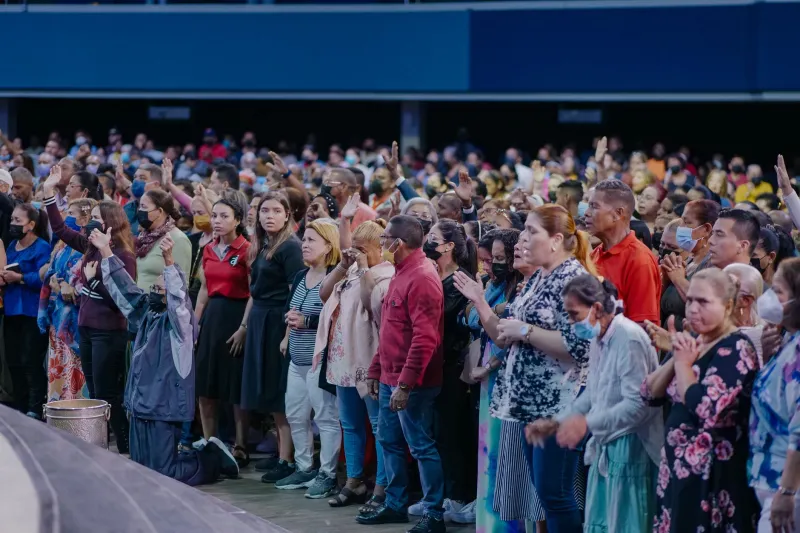
You've been there. You buy a ticket weeks in advance, show up on time, and still find yourself wedged into a crowd so dense you can't lift your arms. The fire exits feel very, very far away. The official capacity number posted on the venue's website seems like a suggestion rather than a limit. You wonder, briefly, if anyone actually counted.
Someone did count. They just sold past that number on purpose.
The Airline Industry Already Normalized This
Overbooking isn't a new concept. Airlines have been doing it for decades, banking on the statistical reality that a certain percentage of passengers will cancel, miss their flights, or rebook. The math usually works out. When it doesn't, someone gets bumped and handed a travel voucher.
The live events industry borrowed this logic — quietly, without much fanfare, and without the same consumer protections that govern air travel. Promoters and venue operators have increasingly leaned on data modeling to sell ticket allotments that exceed hard capacity, operating on the assumption that walkouts, early departures, and no-shows will naturally thin the crowd before things get genuinely dangerous.
The assumption doesn't always hold.
What "Capacity" Actually Means (And Doesn't)
Venue capacity numbers are established by local fire marshals and building code authorities, typically based on square footage, exit configurations, and occupancy classifications. These aren't soft guidelines — they're legal ceilings with real safety rationale behind them.
But here's where it gets complicated: capacity limits are set for the physical space, not for the number of tickets an organizer is legally permitted to sell. In most U.S. jurisdictions, there's no statute that explicitly prohibits selling more tickets than a venue can hold. The assumption baked into the regulatory framework is that organizers won't do that, because doing so would be reckless.
The events industry has tested that assumption aggressively.
Overbooking strategies vary by event type. For large festivals with multiple stages and open grounds, operators may sell well past single-space capacity on the logic that crowds will distribute. For standing-room concert venues, the math gets murkier — and the margin for error shrinks considerably. A 1,200-capacity room that moves 1,400 tickets doesn't look dangerous on a spreadsheet. It looks very different when 1,350 people actually show up on the same night.
The Data Problem Nobody Wants to Talk About
Documented crowd crush incidents and dangerous overcrowding events at American venues have a frustrating thing in common: the post-incident reporting rarely surfaces ticketing data. Investigations focus on security failures, crowd management protocols, and emergency response. Whether the venue was operating at or beyond legal capacity — based on actual tickets sold — is almost never the central question asked by regulators or reported by media.
That gap isn't accidental. It reflects a structural absence of oversight. No federal agency currently tracks ticket sales against venue capacity as a routine safety metric. State-level consumer protection bureaus occasionally investigate individual complaints, but systemic overbooking rarely triggers enforcement action unless a documented harm can be directly and legally tied to ticket overselling — a causal chain that's difficult to establish after the fact.
The result is an accountability vacuum. Promoters who oversell face little regulatory consequence unless something goes catastrophically wrong, and even then, the connection between ticket volume and crowd density is rarely the basis for legal action.
Who Profits, and How Much
The financial incentive to oversell is straightforward. A sold-out show at nominal capacity generates predictable revenue. A sold-out show with a 10-15% overage — counting on no-shows and early exits — can meaningfully improve margins on events where production costs are fixed. For high-demand shows where resale markets are active, the promoter may also benefit indirectly from inflated perceived demand, which drives secondary market prices and enhances the overall brand value of future events.
Service fees compound the picture. Because per-ticket fees are charged on every transaction — including tickets that were never meant to be used simultaneously — the ticketing platforms processing these sales have their own revenue interest in high-volume allotments. The incentives across the ecosystem point in one direction.
What Happens to the Person Holding the Ticket
For most attendees, overbooking manifests as discomfort. Long entry lines. Crowded floors. Bars that can't serve everyone. Bathrooms that become a genuine strategic challenge. It's annoying. It's not what you paid for.
For some attendees, it's worse than that.
Crowd crush dynamics — the physics of densely packed human bodies in enclosed spaces — are well-documented in safety research. Pressure waves in a crowd can injure and kill people without anyone intending harm, without a single act of violence, and in conditions that might look, from a distance, like an enthusiastic audience. The line between "packed show" and "dangerous crowd density" is narrower than most people realize, and it's a line that gets crossed more easily when a venue is operating above its intended load.
The tragedy in Houston at Astroworld in 2021 brought crowd safety into sharp public focus, but the conversation that followed centered heavily on event management protocols and artist responsibility. The upstream question of how many tickets were sold versus how many people that space could safely hold — and who authorized that gap — received far less sustained scrutiny.
The Regulatory Patchwork That Lets This Continue
Federal consumer protection law doesn't specifically address event overbooking. The FTC has broad authority over deceptive trade practices, but a legal argument that selling a ticket to a potentially overcrowded event constitutes fraud is a difficult one to make, especially when venues can point to language in their terms of service about capacity management and entry procedures.
At the state level, a handful of attorneys general have investigated ticketing practices — mostly around fees and resale restrictions — but overbooking as a standalone consumer harm hasn't been the subject of significant enforcement campaigns.
Some cities have moved toward requiring real-time crowd monitoring technology at large events, particularly after high-profile incidents. But monitoring crowd density after people are already inside doesn't address the upstream decision to sell more tickets than the space can safely accommodate.
What Organizers Can Do Differently
Not every promoter operates this way, and it's worth saying that clearly. Many independent organizers and venue operators take capacity limits seriously — not just as legal compliance, but as basic duty of care to the people who show up.
The tools exist to do this right. Timed entry windows can distribute arrival loads. Capacity management software can flag when real-time attendance is approaching limits. Honest no-show modeling, rather than aggressive overbooking, can improve financial predictability without manufacturing risk.
Transparency helps too. Attendees who know a venue's capacity and can see that a show is genuinely sold out — not sold past full — can make better decisions about when to arrive, where to stand, and how to navigate the space.
The Ticket You Bought Was Real. The Space Wasn't.
When you buy a ticket on Eventer or anywhere else, you're making a transaction built on an implicit promise: there will be room for you. Not just a seat or a spot on the floor, but actual, physically safe room to exist in that venue for the duration of the event.
That promise is being quietly renegotiated by parts of the industry, using algorithms instead of conversations, and regulatory silence instead of consent.
You deserve to know that. And honestly, the industry should have to answer for it.