Closer to the Stage: Why Your Favorite Artists Are Trading Arenas for Intimate Rooms
There's a moment every concertgoer knows — the one where you realize you're watching your favorite artist from so far away that their face is basically a pixel on a jumbotron. You paid real money for that pixel. You wore the shirt. You sang every word. And somehow it still felt like watching a livestream from an expensive parking lot.
That experience, repeated across hundreds of tours over the past decade, has quietly pushed a growing number of artists in a different direction. Not smaller careers. Smaller rooms.
The Intentional Downsize
When artists like Phoebe Bridgers, Hozier, or even legacy acts like Aimee Mann announce a run of 2,000-capacity theater dates instead of amphitheater shows, it's easy to read that as a commercial signal — maybe the albums aren't selling, maybe the streaming numbers dipped. But that read is increasingly wrong.
More performers are actively choosing intimate venues as a deliberate strategy, not a fallback. And the reasons are piling up fast.
For starters, the economics of arena touring have gotten brutal. Production costs — staging, lighting rigs, sound systems, trucking — scale exponentially once you cross into large-venue territory. A mid-tier act filling a 15,000-seat arena might gross more per night on paper, but after the production overhead, venue cuts, promoter fees, and crew costs, the artist's actual take can be surprisingly thin. A sold-out 1,500-seat theater run, by contrast, often delivers better margins with a fraction of the logistical headache.
But the money is only part of the story.
What Streaming Changed About the Touring Calculus
Before streaming, an artist's commercial reach was directly tied to radio play and album sales. A platinum record meant millions of people had physically purchased your music — and that translated, somewhat reliably, to millions of potential ticket buyers. Touring a big room made sense because the audience was big and distributed in ways that justified the scale.
Streaming scrambled all of that. An artist can rack up 50 million plays on Spotify and still struggle to sell 10,000 tickets in a single city. The audience is real, but it's global, fragmented, and casual in a way that physical music buyers never were. Somebody in Ohio might stream your album on repeat for three years and still not drive two hours to see you live.
What artists have discovered — and what the data from direct-to-fan platforms like Bandcamp and Patreon keeps confirming — is that the depth of fan connection matters more than raw reach. A few thousand people who are genuinely devoted will show up, spend money at the merch table, and come back for every tour. A few million passive streamers won't.
Smaller venues are, in effect, a way of playing to the people who actually showed up.
The Fan Experience Argument
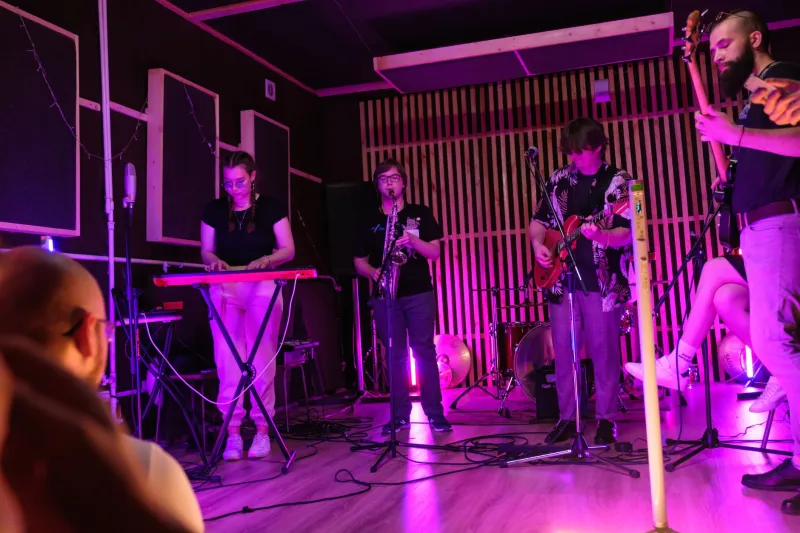
Ask anyone who's caught a favorite artist in a club or a 500-seat listening room lately, and you'll hear the same thing: it felt real. The artist could see your face. You could hear the room breathe. The setlist took risks. Someone in the back called out a deep cut and the band actually played it.
That's not nostalgia talking — it's a genuine product differentiation. In a world where you can watch any artist's full concert on YouTube from your couch, the live experience has to justify itself on terms that a screen can't replicate. Proximity does that in a way that a massive stage production increasingly cannot.
Organizers on platforms like Eventer are seeing this shift reflected in how fans engage with event listings. Smaller-capacity shows in the 500–2,500 seat range are generating faster sell-through times and higher secondary market demand than comparable artists' larger-venue dates from just five years ago. The intimacy itself has become a sellable asset.
What It Means for Ticket Prices
Here's the part that gets complicated. When supply shrinks and demand stays constant — or grows — prices go up. And they have. A floor ticket for a mid-level indie artist in a 1,200-seat room can now run $45–$75 before fees, for an act that was charging $25 in a 3,000-seat venue a few years back.
For fans, that's a real tension. The experience is better, but access is harder. Fewer seats means more competition, faster sellouts, and a secondary market that punishes anyone who hesitates. The intimacy premium is real, and not everyone can afford it.
Some artists are trying to square that circle. Tiered pricing, fan club presales, and venue lottery systems are all being used to give committed fans a better shot at face-value tickets before scalpers can sweep the inventory. It's an imperfect solution, but it reflects a genuine awareness that the shift toward smaller venues can accidentally price out the most loyal fans if nobody's paying attention.
The Relationship Is the Product
Maybe the deepest shift happening here is philosophical. For a generation of artists who built their audiences through social media, newsletters, and direct fan engagement, the concert isn't just a promotional vehicle for recorded music anymore. It's the main event — the primary way a performer and their audience actually know each other.
Arenas were built for a different era, one where the record label created the artist, radio created the audience, and the tour was how the label monetized both. That machine is largely broken now. What's replacing it is messier and more personal — artists who talk to their fans online, who know what cities are showing up in the streaming data, who book a venue specifically because it has the right vibe for the kind of night they want to create.
Smaller rooms are part of that. They're not a consolation prize. They're a choice about what kind of artist you want to be and what kind of experience you want to offer.
What This Means If You're Trying to Get a Ticket
Practically speaking, if your favorite artist has made this shift, you need to adjust your approach. Sign up for their mailing list — not just follow them on Instagram. Fan club presales are increasingly where the good tickets go first, and they're often sold at face value. Set alerts. Move fast. And honestly? Consider traveling for the right show. A two-hour drive to catch someone in a 900-seat room might be the best live music decision you make all year.
The attendance gap — the space between how big an artist could play and how big they choose to play — is closing, and it's closing in the direction of the audience. That's worth paying attention to.