Before You Buy a Ticket, They Already Know You're Coming
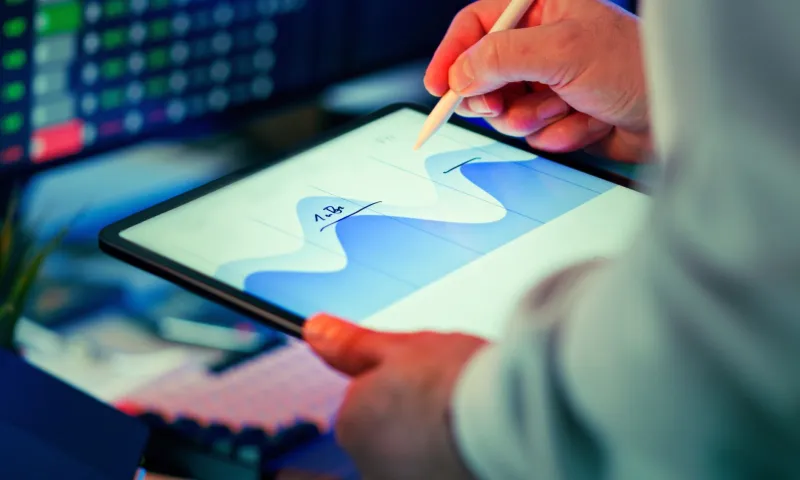
You haven't searched for the event yet. You haven't told a single friend about it. You might not even know it exists. But somewhere, an organizer's analytics dashboard already has a version of you — a behavioral ghost stitched together from past purchases, social media activity, location pings, and streaming habits — quietly being evaluated for how likely you are to become a real, paying, actually-showing-up attendee.
Welcome to the increasingly sophisticated — and quietly unsettling — world of predictive attendee profiling.
The Data Behind the Door
For years, event marketing worked pretty simply: build a list, blast an email, hope for the best. But that model has been crumbling under the weight of attention fragmentation, rising ad costs, and the brutal reality that most people who express interest in an event never actually convert. Enter a new generation of organizers who've decided the problem isn't marketing volume — it's targeting precision.
"We stopped trying to reach everyone and started trying to reach the right people," says Marcus Delray, who runs a mid-sized concert production company out of Nashville. "When you've got a limited capacity venue and a real budget on the line, you can't afford to burn money on people who click 'interested' on Facebook and then ghost you."
Delray's team uses a combination of first-party ticket purchase history, social listening tools, and third-party behavioral data aggregators to build what he calls "likelihood scores" — essentially a numerical estimate of how probable it is that a given person will not just buy a ticket, but actually walk through the door on event night.
It sounds futuristic. In a lot of circles, it's already standard practice.
What They're Actually Tracking
The inputs that feed these predictive models are broader than most people realize. Yes, your past ticket purchases matter. But so does your engagement rate on event-related Instagram posts, whether you've checked into similar venues on Google Maps, how often you open emails from related artists or brands, and even how far in advance you typically buy versus how often you impulse-purchase.
Some platforms have gone further. Certain organizers working with larger data partners have access to aggregate consumer behavior signals that can indicate things like disposable income brackets, social influence scores (how likely you are to bring others with you), and what's sometimes called "show-up probability" — a metric that tries to account for the well-documented gap between ticket sales and actual attendance.
That gap, by the way, is real and costly. Industry estimates suggest that no-show rates for free or low-cost events can hit 40 to 60 percent. Even for paid ticketed events, last-minute cancellations and no-shows can run anywhere from 10 to 25 percent depending on the format. For organizers planning staffing, catering, security, and sponsor activations around attendance projections, that uncertainty is expensive.
Predictive scoring promises to reduce that uncertainty. The pitch is simple: market more aggressively to high-probability attendees, offer early access or exclusive perks to people whose profiles suggest they'll convert and show up, and quietly deprioritize — or stop targeting entirely — people whose behavioral signals suggest they're browsers, not buyers.
The Invisible Guest List
Here's where things get ethically complicated.
When an organizer decides to offer early ticket access to people who score above a certain threshold, they're not just making a business decision. They're making a social one. The people who get the first look at limited inventory are, by definition, the people who've already demonstrated economic engagement with the event ecosystem. People who are newer to a scene, younger, less financially established, or simply less digitally trackable — think older demographics, people who pay cash, people who don't maintain active social media presences — get quietly filtered out of the early funnel.
"It's redlining for culture," says Dr. Priya Anand, a researcher at a media studies program in Chicago who has been studying algorithmic exclusion in entertainment access. "We talk a lot about who can afford tickets, but we're not talking enough about who even gets to know the tickets exist before they sell out."
Anand's concern isn't hypothetical. She points to the well-documented phenomenon of presale codes and early access programs that, while nominally available to anyone who signs up, are increasingly being distributed based on behavioral scoring rather than simple sign-up lists. If your profile doesn't flag you as a high-value attendee, you may never receive the email — even if you've subscribed to every relevant newsletter.
Organizers who use these systems often defend them as pure efficiency. "I'm not trying to exclude anyone," says Delray. "I'm trying to make sure the people who care most get first access. That feels fair to me."
But 'caring most' as defined by a data model is a loaded concept. Algorithms don't measure passion. They measure prior economic behavior. Those aren't the same thing.
Does It Even Work?
Putting ethics aside for a moment — and it's genuinely hard to do that — the practical question is whether predictive attendee scoring actually delivers better outcomes.
The honest answer is: sometimes, and it depends heavily on the model.
Organizers who've implemented these systems report meaningful improvements in marketing efficiency. Fewer wasted ad impressions, higher email open rates, better conversion from click to purchase. Some report modest improvements in actual attendance rates when they focus their promotional energy on high-score segments.
But researchers like Anand are skeptical of the accuracy claims. "These models are trained on historical data," she points out. "They're good at predicting that people who've done a thing before will do it again. They're terrible at identifying new audiences, emerging fan bases, or anyone whose behavior doesn't fit the existing pattern."
That's a significant blind spot. For organizers trying to grow their audience — not just serve their existing one — over-reliance on predictive scoring can create a feedback loop where the same people keep getting access and new entrants to the culture get systematically deprioritized.
The Transparency Problem
Perhaps the most pressing issue is one of disclosure. Most attendees have no idea this profiling is happening. There's no notification that says "your behavioral data is being used to determine whether you receive early access to this event." The terms of service that technically authorize data use are, famously, not read by anyone.
A handful of forward-thinking organizers have started experimenting with more transparent approaches — letting attendees opt into data sharing explicitly in exchange for perks, or publishing clear criteria for how early access is distributed. It's a small movement, but it exists.
For now, though, the dominant model is invisible. Your digital footprint walks into the room before you do, and nobody tells you it's been there.
What This Means for the Live Experience
At Eventer, we spend a lot of time thinking about what makes live events worth showing up for. Part of that is the music, the speakers, the energy. But a big part of it is the feeling that you earned your place in the room — that you found this thing, wanted it, and made it happen.
When algorithms start deciding who gets that chance before the public even knows an event exists, something shifts. The serendipity that makes discovery feel magical gets quietly engineered away. The underdog fan who would've driven four hours to be in the front row never gets the email.
Predictive scoring isn't going away. The tools are too useful and the financial incentives are too strong. But the conversation about how it's used — who it serves, who it sidelines, and what it means for the culture of live events — is one the industry needs to have out loud.
Because a ticket to every moment that matters shouldn't only go to the people an algorithm already decided were going to buy one.