The Second Round Is the Tell: What an $18 Beer Is Really Doing to Your Night Out
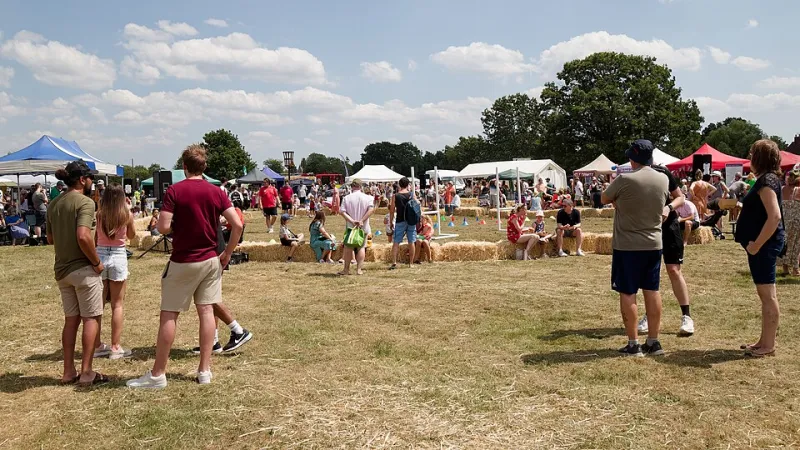
Photo: Acabashi, CC BY-SA 4.0, via Wikimedia Commons
There's a specific moment in every expensive night out when the crowd makes a collective decision. It's not at the door. It's not at the merch table. It's when the first round runs dry and somebody looks at the line, looks at the menu board, and says: "Actually, I'm good."
That's the tell. And organizers who aren't reading it are leaving money — and loyalty — on the concourse floor.
The sticker price is only half the story
Let's do the math the fan does. Two beers at $18 each, plus tax and a card-reader prompt that defaults to 20%, lands you around $45. For two plastic cups of something that costs the venue a few dollars a pour.
The fan isn't wrong to flinch, and the venue isn't cartoonishly greedy either. Concession economics are genuinely squeezed: labor costs have climbed, insurance and security have climbed, and many venue operators work under contracts where the food-service partner takes a hefty commission on gross sales — which means the price floor is set by a deal most attendees never see.
But here's the tension. The industry metric that drives day-to-day decisions is per-cap spend — revenue per attendee. Raise prices, per-caps go up, quarterly numbers look great, and everyone gets a nice email from the regional manager. The problem is that per-caps are a snapshot, and the behavior you're actually buying is a slow-motion decline in how often people show up.
Per caps are a sugar high
Watch what a $16 beer does to the shape of a night.
People arrive later, because they pregamed at the bar two blocks away where a draft is $7. They eat before the doors open. They bring a granola bar in a coat pocket, or a water bottle they swear is sealed. They buy exactly one drink in the first hour so they don't have to get up during the opener. And then — the part that should worry every operator — they skip the second round entirely.
A skipped second round isn't just a lost $18. It's a lost return trip to the counter, a lost impulse merch add, and a fan who leaves with a slightly sour taste that has nothing to do with the beer.
Contrast that with the short history of fan-first pricing. When Mercedes-Benz Stadium opened in Atlanta in 2017 with a menu where a hot dog and a soda each cost a couple of bucks, the industry gasped — and then the venue posted strong per-caps anyway, because volume and goodwill covered the gap. That model has been copied, adapted, and argued about across American sports and live music ever since. The lesson wasn't "cheap food is charity." It was "fair prices convert browsers into buyers."
Your real competitor is the bar across the street
Organizers tend to think their competition is the other show on Saturday. It isn't. It's the pregame.
If a fan can spend $60 at a neighborhood spot before the doors and $20 inside, they'll do it — and they'll arrive at 7:55 for a 7:30 door, clogging your entry lanes and your merch line at the same time. You've transferred revenue to a business that didn't pay for the talent, the insurance, or the load-out.
Some venues have responded with dynamic concessions pricing, cashless-only stands, and mobile ordering that promises to skip the line. All of those can help throughput. None of them address the core objection, which is that the price feels like a toll rather than a transaction.
What actually earns a second round
A few models are quietly working better than the discount-and-hope approach.
The two-tier menu. A genuinely cheap option — hot dog, popcorn, a basic domestic — sitting next to premium items. The cheap tier isn't a loss leader; it's the reason a family of four walks in at all, and it gives the group's biggest spender permission to buy the good stuff.
The package that reads like a deal. A drink plus a snack plus a drink voucher for later, priced just under the sum of its parts. Bundles move the second round to the front of the purchase decision, before the fan has a chance to talk themselves out of it.
Free water, loudly. Post it on the map. Announce it. Nothing generates goodwill faster than a fan realizing they won't be gouged on hydration during a three-hour outdoor set.
Merch-adjacent pricing. The fan who saves $20 on drinks spends it at the merch table at a rate organizers consistently underestimate. That dollar isn't lost — it's relocated, and it buys something with your logo on it.
The takeaway
Concession pricing is design. Every number on that board decides when people arrive, how long they stay, whether they come back, and what story they tell on Monday.
You can hit your per-cap target this quarter and lose the fan for good. Or you can price like someone who wants them in the building three years from now — and watch how quickly a second round turns into a standing tradition.