Scalpers, Superfans, and the Soul of the Secondary Market
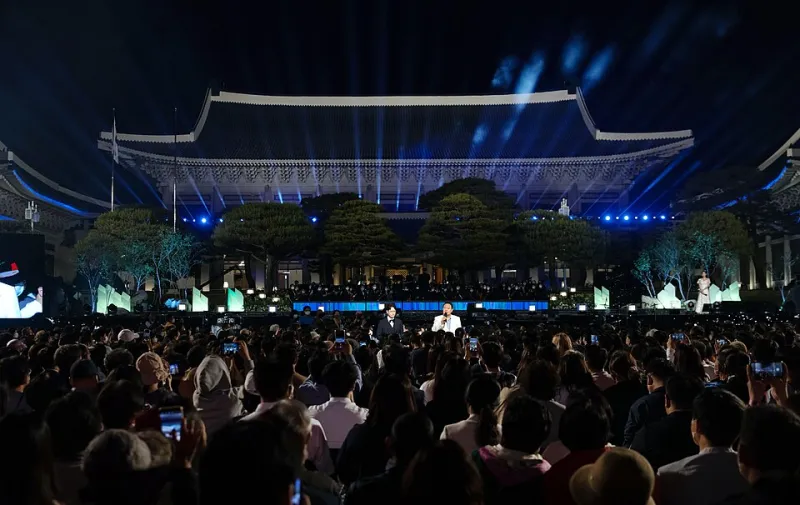
Photo: Republic of Korea from Seoul, Republic of Korea, CC BY-SA 2.0, via Wikimedia Commons
There's a moment every live event fan knows too well. You're staring at a sold-out listing, refreshing the page, watching tickets you could've sworn were available thirty seconds ago vanish into thin air. Then you check StubHub. Same seats, three times the price. Welcome to the secondary market — chaotic, controversial, and apparently, completely unavoidable.
The resale economy around live events has exploded into a multi-billion dollar force that's fundamentally rewiring how Americans experience concerts, sports, theater, and everything in between. And depending on who you ask, it's either the freest expression of market economics working as intended — or the most efficient machine ever built for ripping off regular fans.
How We Got Here
Ticket resale isn't new. Scalpers have haunted venue sidewalks for decades, cash in hand, working the crowd before showtime. What changed is scale and speed. Digital platforms gave resellers the tools to buy in bulk and list instantly. Bots got smarter. And the gap between face value and resale price ballooned to the point where it became genuinely difficult for working-class fans to attend major events without paying a serious premium.
According to a 2023 report from the consumer advocacy group FairTicket Now, average resale markups on top-tier concerts regularly hit 150% to 300% above face value. For arena tours by major artists, that number can climb even higher. The result? A tiered fan experience where access increasingly correlates with disposable income.
Organizers noticed. And they're not happy about it.
Organizers Push Back — With Mixed Results
The most visible response from the event world has been the rise of non-transferable ticketing and identity-verified entry. Artists like Bruce Springsteen and Taylor Swift have experimented with requiring fans to show ID matching the name on the ticket. The logic is simple: if you can't transfer the ticket, scalpers can't profit from it.
But enforcement is messy. Venues aren't always equipped to run ID checks at scale without creating hour-long entry lines. And genuine fans with legitimate reasons to resell — illness, scheduling conflicts, life happening — find themselves stuck with tickets they can't use and no legal way to recoup their money.
Some organizers have turned to dynamic pricing instead, essentially adopting the airline industry's playbook. Prices float with demand, which theoretically captures more value for artists and venues rather than letting resellers pocket the difference. The backlash from fans has been loud and sustained. When Springsteen's 2023 tour used dynamic pricing and some floor tickets hit $5,000, the internet had a field day.
"The problem with dynamic pricing is that it feels punitive to loyal fans," says one independent concert promoter based in Chicago who asked not to be named. "You're essentially telling your most dedicated audience members that their loyalty is worth less than someone's credit limit."
The Platforms Trying to Thread the Needle
Into this tension has stepped a new generation of ticketing platforms positioning themselves as the ethical middle ground. Companies like Lyte and Tixel have built peer-to-peer exchange systems designed to cap resale prices at or near face value while giving fans a legitimate, safe way to sell tickets they can no longer use.
The pitch is straightforward: you get the flexibility of resale without the predatory markup. Sellers recover their costs. Buyers pay something close to what the organizer intended. And the platform takes a modest fee for facilitating the exchange.
Tixel, which has expanded aggressively into the US market after gaining traction in Australia, limits resale prices to a defined percentage above face value — typically around 10% to 20%. It's not perfect, but it's a fundamentally different proposition than watching a $75 ticket flip for $400 on a platform with no ceiling.
For organizers, these kinds of integrations offer something valuable: visibility. When resale happens through a controlled exchange, event creators can see who's actually attending, maintain some pricing integrity, and even reward fans who return tickets to the official pool rather than dumping them on the open market.
What Fans Actually Want
Here's the thing that gets lost in the organizer-versus-scalper debate: most fans aren't trying to game anyone. They want flexibility. Life is unpredictable. You buy a ticket in March for a September show, and by August, everything's different. Being locked into a non-transferable ticket with zero recourse isn't consumer-friendly — it's a gamble that happens to benefit venues when buyers can't attend.
A 2024 Pollstar survey found that 67% of US concertgoers said the ability to resell or transfer a ticket factored into their willingness to purchase in the first place. That's not a fringe preference. That's the majority of your audience making a rational financial calculation before they ever hit "buy."
Organizers who ignore that reality risk something worse than a resale problem — they risk a purchase hesitation problem.
The Road Ahead
State legislatures are starting to pay attention. Several states, including New York and Colorado, have passed or are debating legislation around ticket fees, resale caps, and bot prevention. The federal BOSS Act has been reintroduced in various forms in Congress, targeting deceptive ticketing practices. None of it has fully landed yet, but the regulatory momentum is real.
What's becoming clear is that the secondary market isn't going away. The question is whether organizers treat it as an enemy to be crushed or a behavior to be shaped. The platforms and promoters finding success right now are the ones leaning into fan psychology — building official resale options directly into their ticketing flow, communicating transparently about pricing, and giving attendees genuine flexibility without surrendering the entire margin to third-party resellers.
For everyone who loves live events — and that's a lot of us — the stakes couldn't be higher. Access to shared cultural moments shouldn't be a luxury product. But making that vision real requires organizers, platforms, and policymakers to stop treating the secondary market like a rounding error and start treating it like the structural reality it's become.
The ticket to every moment that matters shouldn't cost three times what it's worth. Getting there is going to take more than a strongly worded terms of service.