Your Fans Are Your Best Marketers — They Just Don't Know It Yet
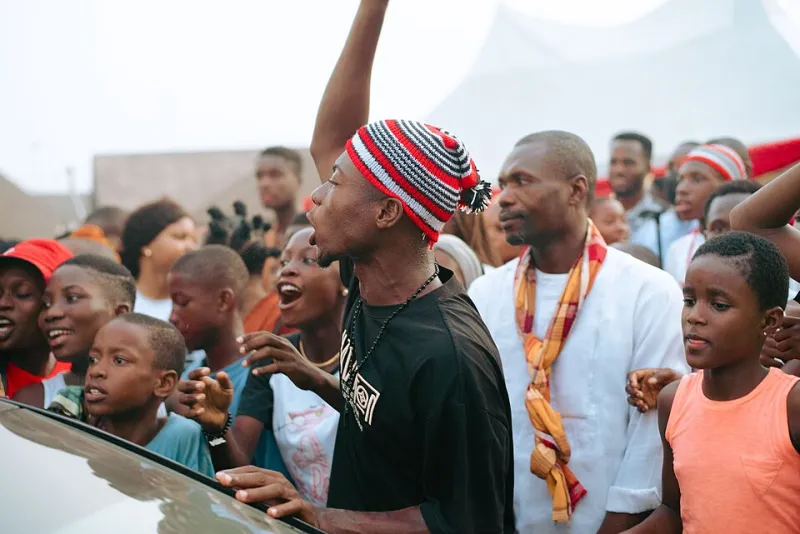
Photo: Umasoyee, CC BY-SA 4.0, via Wikimedia Commons
There's a moment at almost every great event when something shifts. It's not during the headliner set or the keynote speech — it's usually days later, when someone pulls out their phone at brunch and says, "Okay, I have to tell you about this thing I went to." That sentence, repeated across thousands of conversations, is worth more than any ad spend. And the wild part? The person saying it has no idea they're doing marketing.
This is the hidden economy of event communities — a self-sustaining ecosystem where attendees become evangelists, and experiences become movements. It's happening at underground music festivals in the Nevada desert, at niche tech conferences in Austin hotel ballrooms, and at pop-up food experiences in Brooklyn warehouses. And for organizers who understand the mechanics behind it, it's the most powerful growth engine available.
Why People Can't Stop Talking About Certain Events
Let's start with the psychology. When someone attends an event that genuinely moves them — emotionally, intellectually, socially — their brain treats it as a peak experience. Psychologists call these "self-defining memories," moments so vivid and meaningful that they become woven into how a person sees themselves. And what do people do with self-defining memories? They share them. Repeatedly.
But not every event earns that status. The difference usually comes down to one thing: identity resonance. When an event reflects something true about who an attendee is — their values, their taste, their tribe — they don't just enjoy it. They claim it. It becomes part of their personal brand, which means talking about it becomes a form of self-expression rather than a favor to the organizer.
This is why niche events often punch way above their weight in word-of-mouth. A 500-person underground electronic music festival can generate more organic buzz than a 20,000-person mainstream show, because the 500 people who were there feel like they've found something theirs. Exclusivity — even when it's incidental — creates ownership.
The Anatomy of an Evangelist
Not every attendee becomes an ambassador. Typically, organic advocacy flows through three distinct layers.
First, there are the connectors — the socially embedded attendees who already have broad networks and love being the person who introduces people to things. They're the ones who immediately start texting friends during the event: "You need to come to this next year." They're not influencers in the traditional sense; they're just deeply plugged in.
Then there are the documenters — the people capturing everything on their phones, posting Stories, dropping TikToks, building a visual record. They're not necessarily trying to grow an audience. They're processing the experience through sharing. But the content they create becomes discoverable, searchable, spreadable.
Finally, there are the loyalists — attendees who return year after year and quietly recruit within their inner circles. They might never post publicly, but they personally bring three new people every time. Their advocacy is slower but remarkably durable.
Smart organizers build experiences that activate all three types, often without realizing that's what they're doing.
Case Study: How a Small Desert Festival Became a Cult
Consider what happened with a small experimental arts festival that launched in the Mojave several years back. The organizers had almost no marketing budget. What they had was an obsessive attention to detail — handwritten welcome notes in each camp spot, a curated lineup that felt genuinely surprising, and a policy of keeping attendance capped well below demand.
That cap was accidental at first, driven by permit limitations. But the scarcity it created turned out to be rocket fuel. People who got tickets felt lucky. People who didn't get tickets wanted them desperately. Within two years, the waitlist was longer than the attendance, and the event had developed an entire secondary culture: attendee-run prep guides, Facebook groups, Discord servers, Reddit threads. None of it was organized by the event team. All of it was built by the community.
The organizers eventually started leaning into it — giving community moderators early access, featuring attendee art in official materials, acknowledging the fan-built resources publicly. They weren't co-opting the community; they were joining it. That distinction matters enormously.
What Organizers Can Actually Do With This
Here's the practical takeaway: you can't manufacture authentic advocacy, but you can absolutely create conditions that make it more likely to grow.
Design for shareability without being obvious about it. Instagrammable moments are table stakes now, but the more interesting move is designing experiences that people want to describe in words — something funny, surprising, or genuinely moving that doesn't translate to a photo but demands a story.
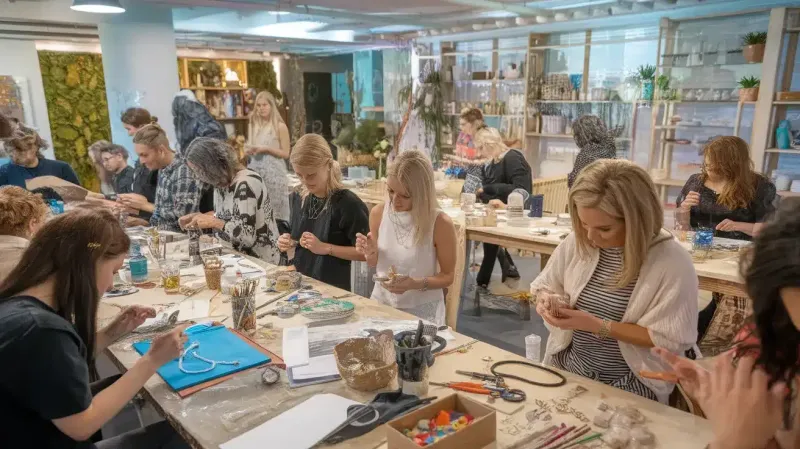
Build in social infrastructure. Communal spaces, shared rituals, group activities — anything that forces strangers to become temporary collaborators creates the kind of connections that generate post-event conversation. When two people who met at your event run into each other later, your event becomes the story.
Acknowledge your community publicly. Repost attendee content. Feature community-created resources. Name-check the people who show up every year. This signals to everyone watching that being part of this thing means something.
Make returning feel special. Loyalty perks, early access, small gestures of recognition — these transform a one-time attendee into a multi-year stakeholder who has personal reasons to want the event to succeed and grow.
The Long Game
The events that build the most durable communities aren't necessarily the flashiest or the biggest. They're the ones that make people feel genuinely seen — like the organizers built this for them specifically, even when they built it for thousands. That feeling of specificity is what converts a ticket-holder into a true believer.
And true believers, it turns out, are the best marketing team you'll ever have. They work for free, they're incredibly convincing, and they never stop.
For organizers thinking about where to invest their energy, the answer is increasingly clear: build something worth talking about, then get out of the way and let your community do the rest.