RSVP Isn't Enough Anymore: How Organizers Are Raising the Bar on Who Actually Shows Up

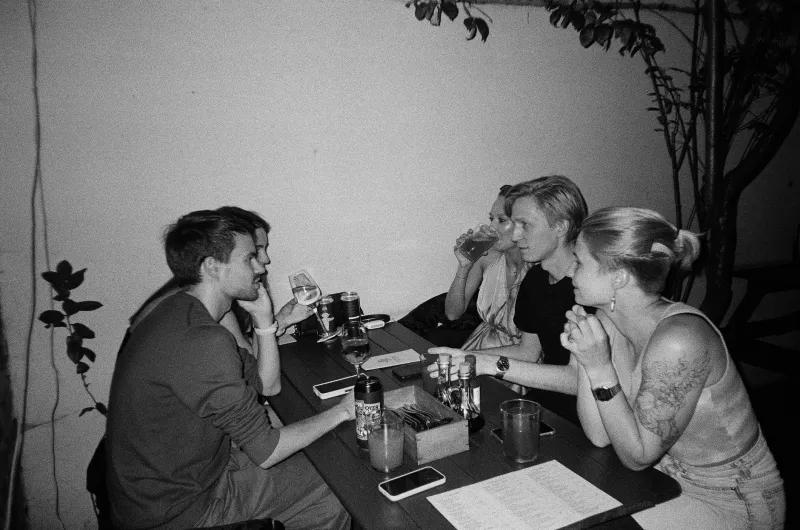
Photo by Photo by Ashley Piszek on Unsplash on Unsplash
There was a time when clicking 'Going' on a Facebook event felt like a genuine promise. You'd show up, you'd mingle, maybe you'd grab a drink and pretend you'd been meaning to do this kind of thing more often. But somewhere between the rise of infinite scroll and the explosion of events competing for your weekend, that little click lost its weight. Organizers noticed. And now they're doing something about it.
Across the country, event planners — from indie concert promoters in Austin to corporate conference producers in Chicago — are quietly rolling out a new layer of accountability between the RSVP and the front door. Confirmation codes. ID verification. Pre-event intake surveys. Even follow-up texts asking attendees to reaffirm their spot 48 hours out. Call it the attendance audit. It's reshaping who shows up, why they show up, and what it says about how we actually value our time.
The No-Show Problem Is Bigger Than You Think
If you've ever organized a free or low-cost event, you already know the gut punch: you plan for 200 people, 200 people say yes, and 80 walk through the door. Maybe 90 if you're lucky. The catering is wrong, the room feels hollow, the energy is off. Sponsors who paid for eyeballs aren't getting what they were promised.
For paid events, the math hurts differently. Empty seats aren't just a vibe killer — they represent real revenue left on the table, potential waitlist attendees who never got their shot, and a distorted picture of demand that makes future planning harder.
"We'd have people register for a workshop, pay the deposit, and then just... disappear," says Mariana Delgado, who runs a series of professional development events for creatives in Los Angeles. "No cancellation, no message. Just gone. We started asking ourselves — are we doing something wrong, or is the culture around commitment just broken?"
She's not alone in asking that question.
Enter the Confirmation Layer
What organizers are building now is essentially a second gate before the physical gate. The mechanics vary, but the intent is the same: make attending feel like an active, conscious decision rather than a passive click.
Some are using confirmation codes sent via email or SMS a week before the event, requiring attendees to log back in and verify their attendance. Others are deploying pre-event surveys — short, two-minute questionnaires asking things like what you're hoping to get out of the experience, or whether your dietary needs have changed since registration. On the surface it looks like logistics. Underneath, it's a soft commitment device.
"When someone fills out that survey, they're mentally showing up before they physically show up," explains Derek Yuen, who produces immersive dining experiences in New York. "They've thought about the event again. They've reengaged. Our no-show rate dropped by about 30 percent after we introduced a pre-event check-in form. That's not nothing."
For higher-stakes events — think industry conferences, exclusive brand activations, or anything with a serious capacity cap — ID verification has entered the picture too. Attendees are asked to upload a government-issued ID at registration, which gets cross-referenced at the door. It sounds intense, but organizers say it dramatically cuts down on ticket transfers that go unreported and ensures the people in the room are actually the people who were supposed to be there.
Who's Pushing Back — and Why
Not everyone loves it. There's a real tension here between accountability and accessibility, and it's worth sitting with.
Critics argue that stacking verification requirements on top of registration creates friction that disproportionately affects certain attendees — people who don't have consistent access to ID, folks who aren't tech-comfortable, or anyone whose life circumstances make a two-week-out commitment genuinely hard to honor. A single parent, a shift worker, someone managing a health condition — they might click 'yes' with every intention of coming and simply not be able to confirm when the reminder hits.
"There's a version of this that's about community and a version that's about gatekeeping," says Priya Anand, a community event organizer based in Atlanta who runs neighborhood gatherings for underserved populations. "If you're running a corporate conference, sure, audit away. But if you're trying to build an inclusive space, you have to think carefully about what you're actually screening for."
It's a fair point. The attendance audit, done poorly, can quietly filter out the people who most need to be in the room.
The Intentionality Argument
Still, proponents say the bigger cultural shift here is actually a healthy one. We live in an era of frictionless commitment — you can say yes to seven things on a Saturday and ghost all of them without a single awkward conversation. The social cost of bailing has never been lower. And that's created a weird paradox where events feel simultaneously everywhere and meaningless.
Adding a layer of intentionality, the argument goes, restores some of that meaning. When you've confirmed twice, answered a few questions, and had your ID on file, showing up feels like a decision you made — not something that just happened to you.
"I think people actually appreciate being asked to commit," says Delgado. "It signals that the event matters. That their presence matters. We've gotten feedback from attendees saying the check-in process made them more excited, not less. It built anticipation."
There's psychology behind that, too. Research on pre-commitment and follow-through consistently shows that the more deliberate steps someone takes toward a goal, the more likely they are to complete it. Organizers are essentially borrowing from behavioral economics to solve a logistics problem.
What This Means for the Future of Events
The attendance audit isn't going away. If anything, expect it to get more sophisticated. Platforms are beginning to build these tools natively into their registration flows — automated confirmation sequences, smart waitlist management that releases spots when re-confirmation lapses, even AI-driven nudges calibrated to individual attendee behavior.
For organizers, the takeaway is nuanced: verification works, but design matters. The difference between a confirmation flow that feels like a bureaucratic headache and one that feels like genuine community-building is mostly in the copy, the timing, and the tone. Ask people why they're excited to come, not just whether they're still coming.
For attendees, there's something worth reflecting on here too. The events that ask more of you before you arrive are often the ones that give more back once you're there. Commitment, it turns out, is kind of the whole point.
Your spot at the table means something. Organizers are just starting to make sure you know it.