The $45 Shirt That Pays the Sound Engineer
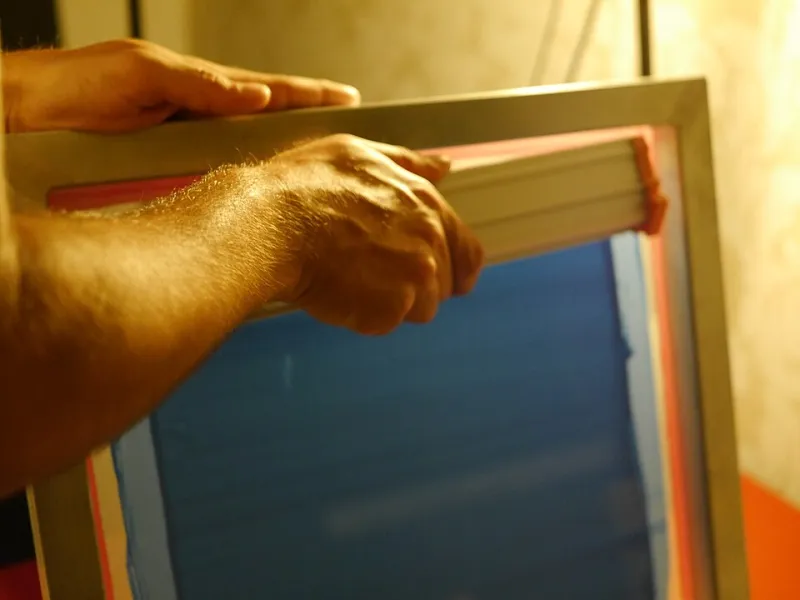
Photo: DinoSound4, CC BY-SA 4.0, via Wikimedia Commons
It is 9:40 and the line at the merch table is twelve deep. The opener's singer is working it herself, in the same shirt she wore at soundcheck, because the merch person called out and there was no replacement coming. Somewhere in that line is a fan who will spend $45 on a tee and $0 on a second drink. Somewhere behind the table is a spreadsheet that decides whether the tour reaches the next city with a functioning transmission.
The Math on a $45 Tee
Start with cost. A decent blank plus a two-color print runs roughly $8 to $11 per unit at typical tour volumes — more if it is a specialty blank, a puff print, or a design that needs four screens. Call it $10.
Then the venue takes its cut. Club deals often run 15 to 25 percent of gross, sometimes as a flat fee. Larger rooms and arenas can push past 30 percent. That is the part artists complain about loudest, and it is also the part most organizers never see because it is negotiated quietly and paid at settlement.
Processing takes another 2.5 to 3.5 percent once you are cashless. Sales tax comes out. Staff costs something, even when it is a friend working for dinner. Then there is the shrink nobody budgets for — the two mediums that sell out in the first twenty minutes while the smalls sit untouched until the load-out.
Net on a $45 shirt, at a mid-size room with a 25 percent commission: somewhere between $16 and $20. That is the number that decides whether the tour breaks even.
What the Commission Buys — And What It Doesn't
To be fair to venues, the commission covers floor space, tables, power, and staff time, and it is often the difference between a building staying open and staying dark. Independent rooms in particular lean on merch commission and bar revenue together; there is no version of the economics where the ticket alone carries the night.
But the friction cuts both ways. A venue that takes 30 percent and then puts the table in a corridor with no lighting and one overworked seller is not so much charging for a service as taxing a mistake.
The Queue Is Where the Money Leaks
Here is the thing nobody measures: a merch line is a closing window, not a queue. Fans buy in roughly three bursts — doors, the changeover, and immediately after the headliner. The post-show burst is short, maybe fifteen minutes of real attention before the room empties and the house lights do their thing.
A well-run cashless table with strong signal moves 30 to 40 transactions an hour per seller. A table running on a dying hotspot, with one terminal that reconnects every fourth tap, moves half that. Multiply the gap by a $45 average and you are looking at real money evaporating — and it evaporates silently, as people put the shirt back on the rail and say they will find it online. They usually do not.
This is where the merch table and the venue network stop being separate conversations. They are the same conversation.
Treating the Table as Programming
Organizers who get this right tend to do the same handful of things, and none of them are expensive.
- Post the hours. A sign at the door and a card on the bar that says when the table opens and closes. Fans plan around it.
- Open a second position at doors. Two sellers for the first 45 minutes beats two sellers at 11 p.m.
- Fix the light. Merch is retail. Nobody buys a shirt they cannot see.
- Run power to the table deliberately, not as a favor to the artist twenty minutes before doors.
- Push offline-capable terminals. Card readers that queue transactions and sync later solve most of the dead-zone problem.
- Agree the commission in writing, up front. Surprises at settlement are why artists leave a room off the next routing.
There is a version of this that is even better — order-ahead pickup, where a QR code at the bar lets a fan reserve a size during the opener and collect it without standing in anything. It exists. It works. It also requires a network that holds up during a changeover, which brings us back to the same place.
What Artists Are Doing With the Margin
A healthy merch table does more than cover gas. It funds the things that make a tour worth remembering: a second lighting guy, a decent hotel night every fifth night, a string player for the hometown show. It is also, quietly, the thing that keeps ticket prices from climbing faster than they already have — merch revenue is the pressure valve.
So when a fan buys the $45 shirt, they are not buying a souvenir. They are buying a sound engineer a paycheck, a van a new alternator, and a tour the extra week.
The least a venue can do is give them a lit table and a connection that works.