Started From the Living Room: How Five DIY Organizers Turned Small Gatherings Into Sold-Out Legends
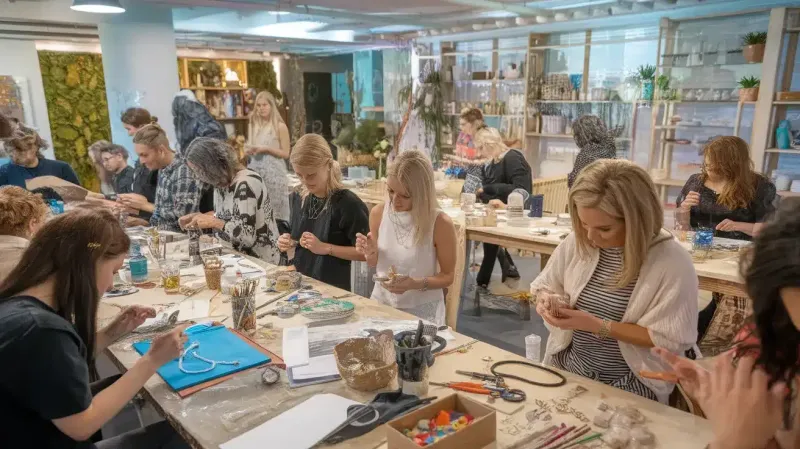
Photo: small intimate DIY event gathering creative community organizer, via boomset.com
The Myth of the Overnight Success
Every sold-out event has an origin story that sounds almost embarrassingly small. A house show with 30 people. A potluck that turned into a community ritual. A Zoom call that somehow became a movement. The path from "thing I'm trying" to "thing everyone wants in on" is rarely straight — but it almost always starts the same way: with one person who cared enough to make something happen.
We found five of those people. Their events span comedy, music, wellness, food culture, and interactive art. Their cities range from Atlanta to Portland. What they share is a stubborn belief that a great experience, built with genuine intention, will find its audience. Spoiler: they were right.
Marcus & The Sunday Sessions (Atlanta, GA)
Marcus Webb was a graphic designer who threw a small jazz and soul music gathering in his Atlanta backyard in the summer of 2021 as a way to bring his friend group back together post-lockdown. He charged $15 a head to cover food costs, promoted it with a single Instagram story, and expected maybe 40 people.
Eighty-three people showed up. The overflow crowd spilled into the alley. Someone live-streamed part of it. By Monday, his DMs were flooded.
"I didn't have a plan," Marcus admits. "I had a playlist, a smoker, and a string of lights."
What Marcus had accidentally discovered was a format — intimate, curated, community-first — that Atlanta's creative community was starving for. He ran the Sunday Sessions monthly, kept the venue small (never more than 150 people), and built a waitlist that now sits at over 2,000. He recently partnered with Eventer to manage ticketing and capacity, which he says transformed his operation from a chaotic group chat to something that actually feels professional.
The lesson: Scarcity isn't just a marketing tactic. When your event genuinely can't hold everyone who wants to come, the demand takes care of itself. Keep it small longer than feels comfortable.
Priya and the Dinner Series That Became a Cultural Institution (Chicago, IL)
Priya Nair started her event as a dinner party. A literal dinner party — eight people, her apartment, a theme based on a different region of India each month. She posted the menu on her food blog. People started asking if they could come. She said yes, moved to a rented community space, and charged $45 a ticket to cover ingredients.
Four years later, Tabla sells out in under six minutes. It's been featured in the Chicago Tribune and Time Out Chicago. Priya has turned down three offers from restaurant groups to "brand" the experience.
"The second it becomes a product, it stops being what people love," she says. "People aren't coming for the food. They're coming because they feel like they're being invited into something real."
Priya's growth strategy was almost entirely word-of-mouth, amplified by a deliberate no-photography policy that made Tabla feel like a secret worth keeping — and sharing verbally. The absence of Instagram content, paradoxically, made people more eager to talk about it.
The lesson: Authenticity isn't a brand voice. It's a structural choice. Build your event in a way that protects what makes it special, even when growth pressure pushes you toward compromise.
The Comedy Basement Kids (Brooklyn, NY)
In 2019, three friends — Danielle, Kwame, and Sofia — started running a monthly comedy night in the basement of a Bushwick bar that held maybe 60 people seated uncomfortably close together. No cover, just a tip jar. They booked comics they personally thought were hilarious, not comics with the biggest followings.
Within a year, they had a waitlist. Within two years, they'd moved to a 200-seat venue and were routinely turning away ticket requests. Several of the comics they'd booked early — when nobody knew who they were — had since blown up nationally. The basement crowd remembered. That history became part of the brand.
"We never tried to be a talent incubator," says Danielle. "We just booked people we thought were genuinely funny. But that instinct ended up meaning something to the audience."
Their approach to marketing was hyperlocal and community-driven: flyers at coffee shops, partnerships with local zine makers, and an email list they grew entirely organically by asking attendees to sign up at the door.
The lesson: Taste is a competitive advantage. If your curation is sharp and genuine, your early adopters become your most powerful marketing force — because they get to say "I was there before."
Soleil's Sunrise Raves (Portland, OR)
Soleil Okafor launched her sober morning dance events on a whim after a conversation about how much she missed dancing but hated the bar scene. She rented a yoga studio, hired a DJ friend, put the event on Eventer for $20 a ticket, and posted about it once on her personal Instagram.
The first event had 22 people. The second had 80. The fifth sold out in a weekend.
What Soleil had tapped into was a genuine gap — a community of people who wanted the release and connection of a dance event without the alcohol-centered environment. She was explicit about the format from day one: sober, morning, all-ages, judgment-free.
"Being specific actually made it bigger," she reflects. "When you try to be for everyone, you end up being for no one. When I said exactly who this was for, those people found me."
She now runs events in three Pacific Northwest cities and has been approached by wellness festivals looking to incorporate her format.
The lesson: Niche is not a limitation. The more precisely you can articulate who your event is for, the more powerfully those people will self-select and evangelize for you.
Ramon's Art After Dark (Los Angeles, CA)
Ramon Delgado worked in museum education by day and thought the art world's evening events were stiff, exclusive, and boring. So he started throwing his own — warehouse spaces, local artists, a DJ, and a strict policy against velvet ropes or VIP sections.
His first event drew 200 people. His fifth drew 800. He now produces quarterly events that sell 1,500 tickets and has a sponsorship relationship with an independent art supply brand that aligns with his values.
Ramon credits his growth almost entirely to his relationship with his audience. He responds to every DM. He features attendee-submitted art in his promotional content. He makes the community feel like co-creators, not consumers.
"People don't just come to my events," he says. "They feel like they made my events. Because honestly, they kind of did."
The lesson: Community ownership is the most durable form of marketing. When your audience feels invested in your success, they don't just buy tickets — they sell them for you.
What All Five of Them Know That You Don't (Yet)
Look across these five stories and a few things become undeniable. None of them started with a marketing budget. None of them had industry connections. What they had was a clear point of view, a genuine community they were building for, and the patience to grow the right way rather than the fast way.
They also all, at some point, made the leap from informal to operational — using tools like Eventer to manage ticketing, communicate with attendees, and build the infrastructure that lets a passion project scale without losing its soul.
The event industry has never been more accessible. The barriers to creating a moment that matters have never been lower. The only question is whether you're willing to start small enough to eventually go big.
Your living room is waiting.