Bots Won the Box Office. Here's How Organizers Are Fighting Back.
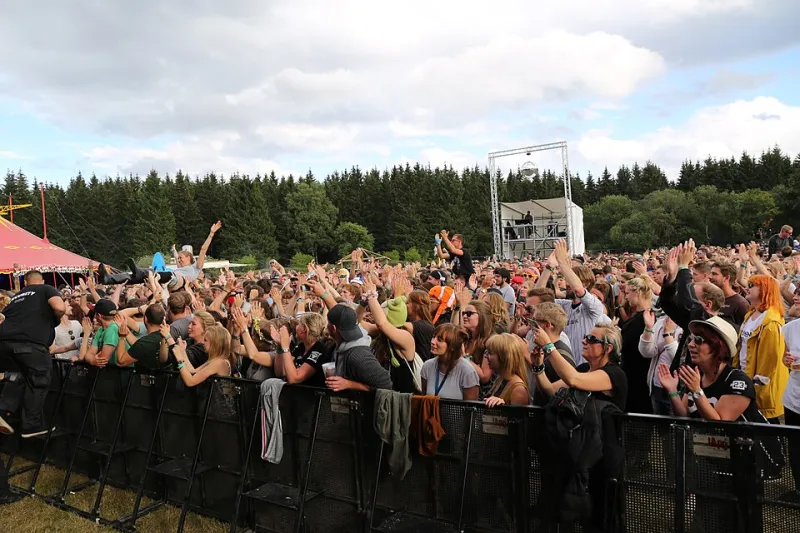
Photo: Vincent Eisfeld, CC BY-SA 4.0, via Wikimedia Commons
Imagine spending months building an event. You've locked in the lineup, negotiated the venue, crafted the marketing, and priced tickets carefully — low enough to be accessible, high enough to cover costs. You open sales at 10 a.m. on a Tuesday. By 10:02, you're sold out. By noon, those same tickets are listed on StubHub for three times the price, and the people you actually made the event for — your community, your fans, your regulars — are locked out.
This is not a hypothetical. It's Tuesday for a lot of organizers right now.
The secondary ticket market in the US generates billions of dollars annually, and a disproportionate share of that money flows not to artists, not to organizers, and definitely not to fans — but to resellers, bots, and the platforms that profit from facilitating the whole cycle. The live events ecosystem has quietly developed a parasite problem, and the host is starting to show symptoms.
How We Got Here
Secondary ticketing isn't new. Scalpers have existed as long as people have gathered in large numbers to watch things happen. But the digital era industrialized the practice in ways that changed its character entirely. Automated bots can purchase thousands of tickets in seconds, faster than any human queue. Resale platforms created legitimate-looking marketplaces that normalized the markup. And for a long time, there was genuine ambiguity — even among well-meaning people — about whether this was just the free market doing its thing.
That ambiguity has mostly dissolved. Study after study, and the lived experience of fans across the country, has made it clear that bot-driven resale culture doesn't just redistribute tickets — it actively degrades the experience of live events. It prices out passionate fans in favor of people who may not show up at all. It creates artificial scarcity that poisons the relationship between organizers and their audiences. And it transfers wealth out of the event ecosystem entirely, into the pockets of middlemen who contributed nothing to the event's creation.
For smaller and mid-size organizers — the kind running independent music festivals, regional conferences, cultural gatherings — the damage is particularly acute. They don't have the leverage to fight the secondary market on legal or technological grounds, and they often take the reputational hit when fans assume the organizer is somehow complicit in the price gouging.
The Approaches That Are Actually Gaining Ground
Here's where it gets more interesting. A growing number of organizers aren't waiting for legislation or platform policy changes to save them. They're building their own solutions, and some of these experiments are producing real results.
Fan-to-fan transfer controls are one of the simpler tools getting more traction. By issuing tickets tied to the buyer's identity — requiring ID verification at the door — organizers make it much harder to resell anonymously. The friction isn't zero, but it's enough to deter casual scalpers. Artists like Harry Styles and Bruce Springsteen's team have implemented variations of this at scale, with mixed but generally positive fan reception.
Loyalty-first presales flip the traditional model. Instead of making tickets available to whoever has the fastest bot or the most disposable income, these systems reward documented fans — people who've attended previous events, streamed a certain amount of content, or engaged meaningfully with an artist or brand. It's a way of saying: the people who've already shown up get first access. Independent organizers running recurring events have found this particularly effective at building the kind of repeat-attendance community that sustains an event long-term.
Dynamic pricing, when done transparently, can also reduce the arbitrage opportunity that makes resale so attractive. If face-value prices adjust with demand — rising as the event approaches and inventory shrinks — there's less gap between what the organizer charges and what the secondary market will bear. This is genuinely controversial among fans who feel any price increase is a betrayal, and it requires careful communication to avoid backlash. But organizers who've implemented it thoughtfully report that it captures revenue that would otherwise go entirely to resellers.
Blockchain: Overhyped, or Actually Useful Here?
Blockchain-based ticketing has been promised as a solution to secondary market abuse for years, and for most of that time it's been more concept than reality. But the technology is quietly maturing, and a handful of real-world implementations are worth watching.
The core promise is straightforward: a ticket issued on a blockchain is a unique, verifiable digital asset that can be programmed with rules — including restrictions on resale price, transfer conditions, or even automatic royalty payments back to the organizer on any secondary sale. Smart contracts can enforce policies that would be impossible to implement through traditional ticketing infrastructure.
Small festivals and independent music organizers have been among the earliest real-world testers, partly because they have more flexibility to experiment and less to lose if the rollout is bumpy. The results are promising enough that larger players are paying close attention, even if they're not ready to commit publicly.
The Organizer's Real Advantage
What the most successful anti-scalping strategies have in common isn't technology — it's relationship. Organizers who've built genuine community around their events have a natural defense against the secondary market, because their fans are invested in the experience, not just the transaction.
This is something that no bot can replicate. A ticket to a beloved local festival isn't just a seat — it's membership in something. When organizers lean into that, when they communicate directly with their audience, create exclusive perks for verified buyers, and make the purchase experience feel personal, they're building something the secondary market genuinely can't commodify.
That's the insight that the most innovative organizers on the Eventer platform keep coming back to: the best defense against scalpers isn't a better CAPTCHA. It's a better relationship with your audience.
The Fight Isn't Over
Legislation is slowly catching up. Several states have passed or are considering bills targeting bot usage and resale practices, and there's been renewed federal interest in revisiting the BOTS Act enforcement. But legal frameworks move slowly, and the secondary market adapts quickly.
In the meantime, the organizers who are figuring this out are doing it event by event, relationship by relationship — building the kind of communities where gatekeeping 2.0 doesn't get a foothold because the people who actually care about the event are already inside.